Author talk and book signing -
Sunday, October 15, 2:00 p.m.
Shelburne Public Library
201 Owen Sound Street,
Shelburne, Ontario
L9V 3L2
--MAP--
Tel: 519.925.2168
Email:
info@shelburnelibrary.ca

Gregory Klages investigates the theories surrounding the 1917 death of Canadian painter Tom Thomson.
Friday, September 29, 2017

Tom Thomson death myth #9 - 'Tom died over a debt'

Tom Thomson’s July 1917 death shocked his friends and
family. Given that the man was only 39 years old, many found his death hard to explain.
Those who examined Thomson’s corpse concluded that he drowned by accident. Nonetheless, gossip and suggestions of alternate explanations have
fuelled a century of speculation.
In the 1970s, it was proposed that Tom Thomson died in a fight over a debt. The story - dependent on gossip and demonstrable errors - is wrong.
The story that Tom Thomson died over repayment of a debt can be tied to two persons. The first is Daphne Crombie, a woman who met Tom Thomson at Canoe Lake in 1917. The second is Roy MacGregor, a journalist and author who since the early 1970s has published a multitude of articles and two books regarding Thomson's death (one fiction and one non-fiction).
Although the roots of the debt story can be found in evidence recorded in 1917, the idea that Thomson was killed over a debt first appeared in 1977 (sixty years after Thomson’s death!). That year, Roy MacGregor wrote 'The Legend', an article in The
Canadian magazine. In the article, MacGregor shared
comments he claimed to have been told by Crombie.
In MacGregor's account, Crombie had speculated that Tom
might have been killed by Shannon Fraser in a fight over money. (Fraser operated
Mowat Lodge in Algonquin Park, where Thomson had been living since early April 1917.)
Crombie apparently offered that Thomson had loaned Fraser money, and in July
1917, asked him to repay the debt. A fistfight ensued. During its course,
Thomson fell, striking his head on the fire grate. The blow either killed
Thomson immediately, or left him unconscious. Regardless, Crombie speculated, Fraser, assisted by his wife Annie, and out of fear of being
charged with murder, hid the body in the lake.
In his 2010 book, Northern Light, MacGregor added to the story, stating that
Winnie Trainor had told Margaret Thomson (Tom’s sister) that, “a $250 loan Tom had made
to Fraser two years earlier had not yet been fully paid back.” *
An
unpaid debt, a fight, murder, and a hidden corpse... compelling anecdotes
that make a tantalizing story. The story, as told in MacGregor’s 1977 and 2010
accounts, directly contradicts the evidence from 1917.
After Thomson’s death, several members of Tom’s family
were in contact with Winnifred Trainor, a Huntsville woman whose family leased
a cottage at Canoe Lake. In late August or early September 1917, Trainor met one of
Tom’s sisters, Margaret Thomson, in Toronto. They discussed Tom’s life, and of course, his death. In
early September 1917, Margaret wrote Tom’s patron, Dr. James MacCallum, sharing with him what she had learned from Trainor.
By the time the two women met, Margaret was aware that Tom had loaned Shannon Fraser
$250 to buy canoes. She inquired with Trainor about the loan. Trainor
told Margaret that, “she had asked Tom this spring if he ever got that money, and he said he got it
all but in very small amounts.” **
Tom Harkness, Tom Thomson’s brother-in-law and
executor of Tom’s estate, pursued the issue with Fraser in September 1917,
asking, “did you pay Tom for the canoes
he bought for you and when.” [sic]
The same month, Winnie reported to Tom's brother, George, what she
had told Margaret, stating, “Tom
said this spring while at our house that he had loaned Fraser $250.00
for canoes, but that he had got it all back but in little bits though.”
Trainor’s reports that the debt had been repaid seems to
have satisfied Harkness, who did not pursue the issue of the 'canoe
debt' any further.
Following on Trainor's two statements that Fraser's debt to Tom had been repaid,
no one closely involved in Tom's life suggested that Fraser owed Tom an outstanding debt. None suggested Fraser and Thomson had a fight over money.
None suggested Tom had died seeking repayment of the debt.
MacGregor's statement that Trainor claimed the debt had not been repaid - is simply wrong.
Trainor’s letter clearly indicates the debt was
repaid. (See Notes below.)
It would be easy for us to
hold MacGregor culpable for his 1977 error. This is not an entirely fair
assessment, though. While he reported Crombie’s claim, we know her speculation is
contradicted by Trainor’s 1917 claims. In 1977, however, Trainor’s letter was
still held privately by the Thomson family. It was not made publicly accessible
until the 1990s, when it was donated to Library & Archives Canada. In 2008, 'Death On A Painted Lake: The Tom Thomson Tragedy' project made excerpts from the letter available freely on the world wide web.
Writers who have retold
and expanded on Crombie/MacGregor’s ‘debt story’ since the 1990s – including
MacGregor - have overlooked or
ignored Trainor’s 1917 statements that the debt was repaid, and perpetuated a flimsy
myth about Tom Thomson’s death.
(For instance, in 2018, John
Little claimed in Who Killed Tom Thomson? that, “[Fraser] had
evidently paid a good portion of the loan back, but there was still some money
owed.”)
------
NOTES:
* MacGregor's statement can be found in Chapter 9 of Northern Light: The Story of Tom Thomson and The Woman Who Loved Him. For more, see the note below. Once again, he writes: "a $250 loan Tom had made
to Fraser two years earlier had not yet been fully paid back.”
** The quoted passage from Margaret Thomson's 9 Sept. 1917 letter directly contradicts MacGregor's 2010 account of what the letter says. Once again, she writes, "[Trainor] had asked Tom this spring if he ever got that money, and he said he got it
all but in very small amounts.”
Gregory Klages - © 2017
---
Gregory Klages was Research Director for the website Death On A Painted Lake: The Tom Thomson Tragedy, launched by the Great Unsolved Mysteries in Canadian History project in 2008. Klages is the author of the 2016 book, The Many Deaths of Tom Thomson: Separating Fact from Fiction (Dundurn Press).
Tuesday, September 19, 2017
Tom Thomson death myth #10 - "Fishing line = murder."

The fishing line story (and the conspiracy theory spun from it) is not supported by the evidence we have available about Thomson's corpse.
When
Tom Thomson’s body was discovered in July 1917, two men examined his remains: a doctor holidaying in Algonquin Park, and an Algonquin Park Ranger. At the time, neither
man recorded seeing fishing line around any part of Thomson’s body. The claim that fishing line was found on Thomson's body was first made in the 1930s - thirteen years after Thomson's death - by Park Ranger, Mark Robinson. Robinson's claim was never corroborated by any other witnesses, though. Robinson also never explained why his 1917 notes don't mention the fishing line. Complicating his claim further, in the 1950s, Robinson offered yet another version of his testimony: he claimed he had noted the fishing line in 1917 (which we know is false), reported different 'facts' about the fishing line than he had in the 1930s, and stated his conclusion about Thomson’s
cause of death that was different from what he stated in 1917 or 1930.
All
of these facts strongly suggest the ‘fishing line story’ is suspect, and raises the prospect that one of the pillars supporting murder theories is weak.
---
We know that Tom Thomson’s body was discovered on the morning of July 16, 1917.
We
know this from several documents produced that day, and in the days that
immediately followed. The daily diary of Mark Robinson, the local Algonquin
Park Ranger, is one of the key records we have from July 1917 (worth noting: his diary is
the only record Robinson produced in 1917). In his diary, Robinson recorded the
search for Thomson, as well as discovery and displacement of Thomson's remains.
For
the July 16 entry, Robinson states that Thomson’s body was discovered floating in Algonquin Park's Canoe Lake about 9
a.m. He writes that George Rowe and ‘Lowrie’ Dixon, “took same and brought it
to shore.”
The
following day, Robinson records
that Thomson’s body was removed from the lake. He and Dr. G. Howland, who was
holidaying at Canoe Lake, examined the corpse. Later that day, Robinson
recorded observations about Thomson’s remains. Nowhere in these notes – nor
anywhere else in his 1917 diary entries – is there mention that he found a fishing line
around any part of Thomson’s corpse.
A transcription of Howland’s
1917 notes, provided to researcher Blodwen Davies by the Nipissing Crown
Attorney’s office in the 1930s, doesn’t include any mention of suspicious
fishing line on Thomson’s remains either. Similarly, a transcription of
Howland’s observations held by George Thomson – Tom’s brother – also supplied
to Davies in the 1930s, doesn’t mention fishing line.
That no 1917 account makes any mention of suspicious fishing line is important. Clearly, in 1917, either no fishing line was observed, or if it was observed, it was not regarded as in any way important to Thomson’s disappearance and death.
If the fishing line
wasn’t noted in 1917, we can learn much about the claim by tracking when it
first appeared, and how the story evolved.
Only one person - Mark Robinson - ever claimed that fishing line was found on Tom Thomson's corpse. Robinson mentioned the line for the first time in a 1930 letter to
Blodwen Davies, thirteen years after Thomson’s death. At this time,
Robinson suggested the line was not Thomson’s regular fishing line.
Why Robinson would wait thirteen years to offer this insight, particularly if he felt it provided evidence that Thomson might have died by foul play, is difficult to understand. Making Robinson’s testimony even more suspect, in the early 1950s, he added details to his story about the fishing line. Robinson stated that when he examined Thomson’s corpse, he found the line was “carefully” wound “16 or 17 times” around Thomson’s ankle. Robinson noted that he could prove this claim because he recorded his observations in his diary. We know, however, that his diary says nothing of the sort; it doesn’t mention fishing line at all!
Robinson’s ‘fishing line’ stories from the 1930s and 1950s do not agree with any 1917 evidence (even evidence recorded by Robinson himself in 1917). This should raise our suspicions about the tale. That Robinson’s accounts gained new elements and more details over decades also suggests skepticism about Robinson's claims – particularly those furthest from the experiences he describes - is necessary.
So, is the fishing
line story purely fiction? Did Robinson invent it out of thin air? What if the
fishing line existed, but has an innocent explanation?
Robinson was not
present when Thomson’s body was discovered, or when it was brought to shore. His
diary doesn’t mention how the guides brought Thomson’s body to shore, or to
anchor the body once it was brought to shore. If the guides used fishing line
to tow or anchor the body, as time passed Robinson might have forgotten this
entirely logical explanation. If this is the case, however, it does not explain
why Robinson would not have asked questions about it in 1917. The record he produced
at the time Thomson’s body was discovered suggests that Robinson’s suspicions were not raised, either because the fishing line had a reasonable
explanation, or because he never saw it all.
Gregory Klages - © 2017
To read more evidence about Tom Thomson's death, and to learn how story-telling about Thomson's death has diverged further and further from the evidence, read The Many Deaths of Tom Thomson: Separating Fact from Fiction (Dundurn Press, 2016).
Gregory Klages was Research Director for Death On A Painted Lake: The Tom Thomson Tragedy, part of the international award-winning Great Unsolved Mysteries in Canadian History project.
Gregory Klages - © 2017
---
Perplexed? Challenged? Interested in reading more?
Monday, July 24, 2017
Author talk - Sep. 26, 7 p.m. - Yorkville Public Library
Author talk and book signing -
Tue Sep 26, 2017 - 7:00 p.m.
Yorkville Public Library
22 Yorkville Avenue,
Tue Sep 26, 2017 - 7:00 p.m.
Yorkville Public Library
22 Yorkville Avenue,
Toronto, ON
M4W 1L4
416-393-7660
Author talk - Sep. 21, 6:30 pm - Dawes Road Public Library
Author talk and book signing
Thursday, Sep 21, 2017 - 6:30 p.m.
Dawes Road Public Library
416 Dawes Road, Toronto, ON
M4B 2E8
416-396-3820
Thursday, Sep 21, 2017 - 6:30 p.m.
Dawes Road Public Library
416 Dawes Road, Toronto, ON
M4B 2E8
416-396-3820
Friday, July 7, 2017
On the 100th anniversary of Tom Thomson's disappearance
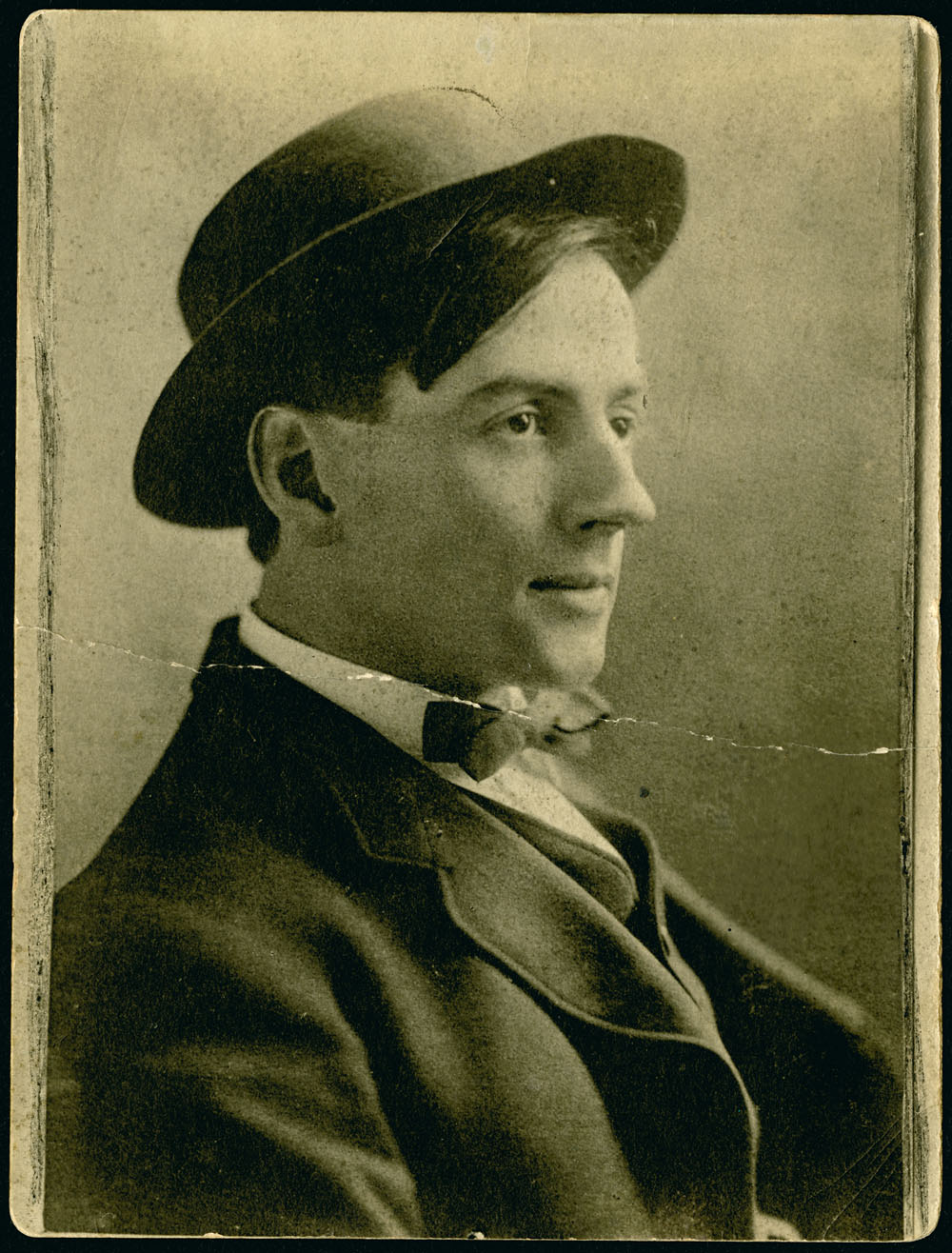
As Thomson's reputation grew, so did interest in his life, and particularly, in his death. Since the 1970s, a significant body of writing has been devoted to exploring Thomson's disappearance and demise. These works have offered arguments based on evidence, hearsay, speculation, and sometimes even outright fictions regarding what happened to Thomson in July 1917. While some have served to expand our knowledge, others have served to further confuse our understanding of what happened to Tom Thomson 100 years ago.
Myths have displaced the facts
When beginning the work that would become Death on A Painted Lake: The Tom Thomson Tragedy, I surveyed much of the literature that has been written about Tom Thomson's demise, particularly over the last few decades. I encountered stories of drunken fights, unpaid debts, unwanted pregnancy, suicide coverups, and murder conspiracies. What I was surprised to discover, as I turned to the primary evidence - the documents written in 1917 - was how few of these claims had any evidence to support them. What I soon came to realize is that much of what we've been told of Tom Thomson's last spring and death is more myth than fact.
In particular, much of the writing claiming Thomson's death was the result of suicide or murder incorporates fanciful speculation rooted in gossip, misunderstanding, and entertaining but ultimately untrustworthy stories.
What are the roots of the mythology?
Tom Thomson was initially buried in Algonquin Park. Much of the mystery surrounding Thomson’s death was initially fed by awkward communication regarding the Thomson family’s wishes for Tom’s remains. Evidence from the time indicates his family never wanted to have him buried in Algonquin Park, and tried to communicate their wishes to those at Canoe Lake, where his body was discovered and first buried. Technological problems and poorly worded telegrams from those in Canoe Lake produced delays that had repercussions for those living and working in the presence of their friend’s decomposing body. Without word of the Thomson family’s wishes, all at Canoe Lake agreed something must be done. The exceptional challenge of having to deal with a tragic death in the small community, and perhaps some insecurity about who should have responsibility for decision-making regarding Thomson's body, resulted in decisions being made on the fly. Anxiety was no doubt compounded when it was discovered that the decision reached by those at Canoe Lake did not accord with the Thomson family's desires.
Conflict over such an emotional issue clearly caused consternation and frustration all around. The exhumation of Thomson’s body from his Algonquin Park burial site within a day of his preliminary burial created fertile ground for hostility and suspicion over the decades to come. Eventually, these feelings would bear ill fruit.
How should Tom Thomson's death be remembered?
Over the last century, Thomson has often been characterized as a deft outdoorsman with natural skill at painting a unique, distinctively Canadian environment that he knew well. This is an image that Thomson’s friends and supporters worked to advance after his death. It was integral to the rise of his reputation. If Thomson died as a result of a canoeing accident in the middle of the day on a calm lake, this image would be significantly destabilized. It is not however, an image, that is necessary to appreciate Thomson’s contribution to the development of Canadian painting. As Harold Town observed, decades of speculation regarding how Tom Thomson died have done little but cloud our understanding of Thomson’s life and the importance of his art. Acceptance of what the evidence suggests about Thomson's death, that he died by accident and not suicide or murder, points to the importance of understanding his painting not through the lens of romantic myth, but as what it was, the inspiring efforts of a skilled and hard-working artist - an artist who could still, nonetheless, make mistakes and suffer accidents.
That Tom Thomson’s painting has become part of the national identity, one of the types of symbols that Canadians share as part of their common language, is a grand legacy for a man who had little art training, but who took the greatest pleasures in life from painting out under the open sky. That he died under that same sky, on the waters and among the trees and islands that populate his paintings is no doubt tragic, and will ever remain so. A hundred years on from his passing, however, he has not been forgotten, nor has the land he loved. Every year thousands of people flock to see his paintings, and to visit Algonquin Park. As a model, as inspiration, his influence lives on. Beyond ideas about his mental state, or his romantic life, or how he managed to get along with his peers, what Tom Thomson is remembered for is the passion that gave his life meaning.
Whether by accident or by natural causes, the fact is that death cannot be put off forever. We have no guarantee of how or when we will die, or what kind of legacy we will leave. Thomson likely cared little about the former, and would be heartily gratified knowing what role he played, and continues to play over a century later, in alerting Canadians to their artistic and natural heritage.
Tom Thomson - 1877-1917 - Rest in peace.
July 8, 2017 - Observe 100th anniversary of Tom Thomson's disappearance
100th Anniversary of Tom Thomson's Disappearance
July 8, 2017 -- 2 p.m.
Join cultural historian Dr. Gregory Klages to commemorate the
100th anniversary of the disappearance of renowned Canadian landscape
painter Tom Thomson.

Klages uses first-hand testimony and archival records to sort fact
from popular legends in writing about Thomson's mysterious demise. His
2016 book, The Many Deaths of Tom Thomson: Separating Fact from Fiction,
has appeared on the National Post Canadian non-fiction bestseller list,
and was included in the Writers' Trust of Canada Best Books of 2016.
Copies of the book will be available for purchase and signing. This is a
free event.
102599 Grey Road 18, RR4, Owen Sound ON, N4K 5N6
Tel. 519-376-3690, Fax. 519-376-4654
Web: www.greyroots.com
Subscribe to:
Posts (Atom)