Thursday, July 7, 2016

Tom Thomson: Murdered? History of a flawed idea.

The possibility that Tom Thomson had been murdered was first raised in July 1917, before Thomson’s death was even confirmed. Newspaper coverage speculated that murder was among the possible reasons for Thomson’s disappearance.

In July 1917, Dr. G. Howland, who was holidaying in Algonquin Park and who was called upon to examine Thomson's remains, concluded that Thomson died by drowning. At the time, neither he, Park Ranger Mark Robinson (who supervised the search for Thomson), the coroner, nor the Park Superintendant recorded any suggestions that Thomson's death had been anything other than an accident (no one else recorded them making such suggestions either).

Going public with suspicions

The first investigator to publicly claim that Thomson had suffered fatal violence was Blodwen Davies. In summer 1931, she asked Ontario’s Attorney General to excavate Thomson’s original Algonquin Park burial place, on the grounds that the coroner’s conclusion of ‘accidental drowning’ was wrong. Davies argued that evidence taken in 1917 clearly pointed to Thomson having sustained a fatal blow to his head. She repeated this claim in her self-published book, A Study of Tom Thomson, the second she devoted to Thomson.

In the 1950s, a conversation with a group of people (likely at Canoe Lake) was recorded on audio tape. During this conversation, Mark Robinson offered that Tom Thomson's temple clearly showed signs of violence. This is the first record we have of Robinson offering such an assertion. He does not make similar statements in his testimony from 1917, or during the 1930s.

A conspiracy theory re-emerges

The murder theory really blossomed as an explanation during the late 1960s. A 1969 CBC documentary and a 1970 book suggested that Thomson had been killed. While the documentary - Was Tom Thomson Murdered? - is pretty much forgotten today, the book – William Little’s The Tom Thomson Mystery – provided many of the claims upon which proponents of the murder theory continue to build their case.

Acrobatic adaptations

The contemporary writer who stands at the forefront of proposals that Thomson was murdered is Roy MacGregor. MacGregor is Canada’s most prolific author regarding the case, having produced magazine articles, a fiction book (published twice, under different titles), and most recently, a non-fiction book devoted to Thomson’s death.

During the late 1970s, MacGregor suggested that Thomson might have been killed in a fight on the night of Saturday, July 7. This is an interesting theory, but evidence points to several people, Mark Robinson included, having seen Thomson on the following morning, July 8. 

In his 2010 book, MacGregor adjusted his argument that Thomson was murdered to fit with the evidence that Thomson was seen on the morning of Sunday, July 8. In his revised theory, MacGregor suggested that Thomson might have returned to Canoe Lake, seen by few, on the night of Sunday, July 8. Upon his return, according to MacGregor, Thomson was killed. This proposal leaves unanswered how Thomson's canoe would be seen floating, overturned, on the afternoon of July 8, hours before MacGregor suggests Thomson was killed.


The Many Deaths of Tom Thomson - The 'Mystery' Resolved?

In The Many Deaths of Tom Thomson, I subject Davies', Little's and MacGregor's claims (as well as those of others who have written about the case) to rigourous analysis. As they all argue that Tom Thomson could very well have been murdered, the strength of their arguments is critical to evaluating the case.

---

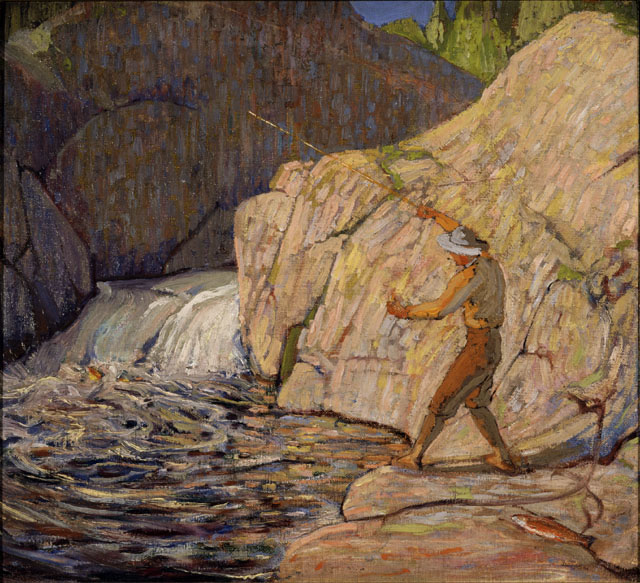
Image: Tom Thomson. c. 1916. The Fisherman. Oil on canvas. Collection: Art Gallery of Alberta.

All of the links for this post direct back to excerpts of transcribed historical documents provided on the website Death On A Painted Lake: The Tom Thomson Tragedy. Gregory Klages was Research Director for the site, launched by the Great Unsolved Mysteries in Canadian History project in 2008. Klages is the author of the 2016 book, The Many Deaths of Tom Thomson: Separating Fact from Fiction (Dundurn Press).

Tuesday, July 5, 2016

Review: "Anyone with even a cursory interest in the Thomson mystique will want to read The Many Deaths of Tom Thomson"

"Paddling into the mists of mystery on Canoe Lake"

Rob Reid, former Arts Editor for the Kitchener-Waterloo Record, writes on his Reid Between the Lines blog:

"Aptly subtitled Separating Fact from the Fiction, the book published by Dundurn does exactly that….

I won’t detail the sober, dispassionate methodology Klages applies to questioning, challenging, [and] testing... the claims… .

Anyone with even a cursory interest in the Thomson mystique will want to read The Many Deaths of Tom Thomson."

Wednesday, June 22, 2016

Tom Thomson: Did he die by accident? History of an idea.

When Tom Thomson was first reported missing on July 10, 1917, his friends around Algonquin Park's Canoe Lake expected that he had merely encountered a bit of trouble, and that he would reappear soon. Even Mark Robinson, the Algonquin Park Ranger who led the search for Thomson noted in his daily diary his belief that Tom had likely merely hurt himself and was awaiting assistance. Initial newspaper coverage - in Thomson's hometown of Owen Sound, as well in Toronto - suggested that Tom had experienced some kind of accident.

Thomson's body was found floating in Canoe Lake on July 16, 1917. Within 24 hours, it was examined by a doctor holidaying in the park, accompanied by Park Ranger Robinson. The doctor pronounced the cause of death as drowning. Among folks at Canoe Lake, the general sense was that Thomson's death was a terrible accident.

On July 18, 1917, two days after Thomson's remains were discovered, they were buried at a small cemetery on a hill overlooking Canoe Lake. The coroner arrived the evening following Thomson's burial, and conducted interviews with people around Canoe Lake, including the doctor who examined Thomson's body. The coroner likely agreed with the conclusion of 'accidental death', as he produced documents approving the burial of Thomson's remains, without alerting authorities to begin an investigation.

Despite the doctor's finding, and likely concurrence of the coroner, during the fall of 1917, the Thomson family was compelled to further consider whether Tom's death had really been accidental. Letters from the time indicate rumours that Tom had committed suicide were circulating at Canoe Lake. The Thomson family maintained the belief, however, that Tom had died by accident.

Public Expression of Doubt

The first public claim that Tom might not have died by accident was published in 1935. In large part, it was based on testimony about Thomson’s corpse that Park Ranger Mark Robinson had provided during 1930 and 1931. During the 1950s, another version of Robinson's accounting of events was recorded. In this version of his testimony, he expanded on details he introduced into the story during the 1930s.

During the early 1970s, the idea that Thomson died by accident was challenged by authors such as William Little and Roy MacGregor. These writers suggested it was far more likely Thomson died by murder or suicide. They suggested the idea that Thomson died by accident was part of a cover-up conspiracy. Their claims, despite tenuous foundations, have come to dominate discussion of the case.

Denials and Reconsiderations

In 1977, David Silcox would attempt to rehabilitate the accident explanation by picking up on comments made by Thomson relatives during the late 1960s. He offered that due to a sprained ankle, Thomson had likely fallen out of his canoe while urinating. Few have taken this proposal seriously, however.

Silcox’s idea notwithstanding, since the early 1970s, the prospect that Tom Thomson died by accident seems to have become the ‘outside contender’ in storytelling about the case. Taking up claims made by Robinson over the course of three decades, as well as 'evidence' introduced by others up to the 1970s, most contemporary writers who choose to write about Tom Thomson’s death suggest he likely died by murder or suicide.
It is noteworthy, however, that the most wide-ranging, well-researched work on Tom Thomson's life - the 2002 exhibition catalogue edited by former National Gallery of Canada curator Dennis Reid - gives only the briefest of reference to speculation that Thomson died by suicide or murder.


The Many Deaths of Tom Thomson - The 'Mystery' Resolved?

Prompted to resolve the difference between the evidence and much of the discussion about the case, historian Gregory Klages has produced the most comprehensive analysis of evidence relating to Tom Thomson's death. The Many Deaths of Tom Thomson: Separating Fact from Fiction (Dundurn Press) uses the documents produced in 1917 to assess what has been speculated about the case, and reviews the plausibility of each of the major theories regarding Tom Thomson's demise.

--------


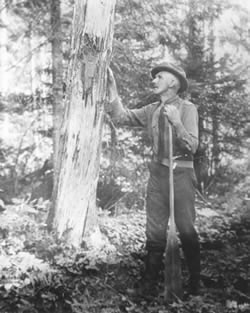
Top photo: Mark Robinson. Undated. Algonquin Park Visitor Centre - APMA 184.

All of the links for this post direct back to excerpts of transcribed historical documents provided on the website Death On A Painted Lake: The Tom Thomson Tragedy. Gregory Klages was Research Director for the site, launched by the Great Unsolved Mysteries in Canadian History project in 2008. Klages is the author of the 2016 book, The Many Deaths of Tom Thomson: Separating Fact from Fiction (Dundurn Press).

Wednesday, June 15, 2016

How did Tom Thomson die?: beginning a genealogy of theories

I'm an inveterate list-maker. I have a weak short-term memory, juggle several jobs, and am father to a small child; lists provide comfort that 'must do' tasks haven't slid off my radar! I also find that lists can make otherwise complex situations more approachable (at risk of oversimplifying them, of course).

Early in my thinking about Tom Thomson’s death, I started making lists.
"Who are the major thinkers?" I asked. "What did they write? When? What stories did they tell? What evidence did they draw on?"

What emerged for me was a kind of genealogical map of story-telling about Thomson’s death, one that illustrated the progression over time in narrative structures and purposes (for those so inclined, you might refer to Hayden White here).

Keeping with the genealogical metaphor, the three ‘branches’ of thinking about Thomson’s death propose that he either died:
1) by accident (drowning)
2) by his own hand (suicide), or
3) by foul play (murder or manslaughter).

Over the coming weeks I will explore each of these lines of thought, identifying the primary texts used to advance each theory. If you can't wait, or want even more information, see my new book, The Many Deaths of Tom Thomson: Separating Fact from Fiction.

As a taste of what’s to come, I offer a brief accounting of some of the leading explanations:

Murder:
- Thomson shot in head
  • while in canoe, by cottager Martin Blecher Jr., likely from the shoreline
  • by poacher
- Thomson clubbed over head with paddle
  • by Martin Blecher Jr.
  • by Shannon Fraser, operator of Mowat Lodge, where Thomson was living at the time
  • by poacher
- severe head wound sustained in fall during fistfight
  • with Martin Blecher Jr.
  • with Shannon Fraser


Suicide
Those advocating suicide have offered little in the way of details regarding how Thomson killed himself. Their primary concern has been to provide arguments for why Thomson might have been suicidal.

Reasons that have been proposed:
- Morose due to:
  • Pressure from lover to get married
  • Possibility lover was pregnant
  • Lack of art recognition
  • Disappointment at not being able to serve in war

Accident
Theories that have been proposed:
- canoe hit deadhead and tipped
- fell while urinating and hit head
- passed out while urinating and hit head
- weak ankle gave way and hit head while falling out of canoe
- waterspout tipped canoe

Revisit this site in coming weeks to learn more about each of these theories.

Sunday, June 12, 2016

Andrew Armitage in Owen Sound Sun-Times (11 June 2016)

Regarding The Many Deaths of Tom Thomson, Armitage writes,"I took it home, reading and rereading it..."

"Six years ago, when Roy MacGregor wrote Northern Lake: The Enduring Mystery of Tom Thomson, I bought totally into his conclusions. Now, after reading Klages, I have changed my mind..."

Thursday, June 9, 2016

Q&A with author - Many Deaths of Tom Thomson

A short 'question and answer' segment with the author of The Many Deaths of Tom Thomson published on the University of Guelph news site.

----
Photo: George Nikitaras, University of Guelph-Humber

Friday, June 3, 2016

The blossoming myths of Tom Thomson's death

Since the 1980s, speculation about Tom Thomson’s death has become a field of its own, fuelling websites, party games, Twitter accounts, rock songs, books, art exhibitions, and plays. Many of these materials, however, depend on the tenuously supported mythology about Thomson’s last days that blossomed during the late 1960s and 1970s.

While many of these works make for fascinating reading (as well as listening, looking, and playing), what is disappointing is that almost a century after Thomson’s death, most of these recent works rarely improve our knowledge by paring away rumours, hearsay, and errors from Thomson’s biography. Most serve to add more confusion to an already confused story.

As the one-hundredth anniversary of Tom Thomson’s death nears, storytelling about the events that took place during the summer of 1917 shows an unprecedented variety of approaches. Some of these efforts have been more serious, and more successful, than others. Some have aimed to use popular versions of the Thomson story as a backdrop for the playing out of other concerns. Some have sought to play upon, rather than resolve, the mysteries as popular entertainment.

Considered apart from the relative quality of these works, the growth of interest in Thomson’s death establishes without a doubt that the man’s presence — as symbol, as story, as model, and as lesson — has become cemented into Canada’s national consciousness. From children’s stories to songs, from poetry books to parlour games, from fiction to academic history, Thomson’s death has moved from something regarded as a fringe concern of conspiracy theorists to a historical reality deserving analysis.

For every step forward that these works have contributed to understanding the end of Thomson’s life, unfortunately, it seems that misinformation and poorly grounded speculation has pushed our understanding two steps back.

Having considered the plentitude of approaches to Thomson’s death told over the last century, we are left with the question at the heart of The Many Deaths of Tom Thomson. How did Tom Thomson die?


See the follow-up to this post: "How did Tom Thomson die: beginning a genealogy of theories." ----
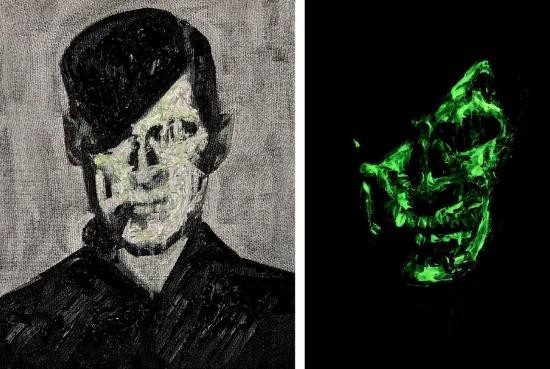
Image: Kim Dorland, 'Tom Thomson', 2010. Oil and acrylic on linen.